Staring down a check-engine light or a mechanic’s estimate for major engine work can feel overwhelming, especially when the number on the repair quote seems close to the price of a used car. Before you assume replacement is your only option, it helps to understand how a rebuild works, what it costs, and when it actually makes more financial sense than buying new. This guide walks through the real-world factors that should shape your decision, from mechanical condition to insurance and legal considerations you might not have thought about. By the end, you will have a clearer picture of whether restoring your current engine is the smarter path forward.
What Actually Happens During an Engine Overhaul
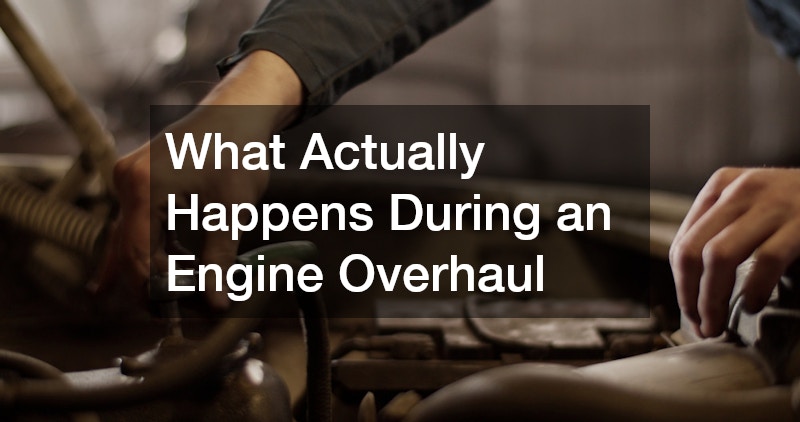
An engine rebuild is a methodical process where a technician disassembles the engine, inspects every component, and replaces or reconditions the parts that have worn out. This typically includes new piston rings, bearings, gaskets, and seals, along with machining the cylinder walls and resurfacing the crankshaft if needed. Done correctly, car engine rebuilds can restore an engine to near-original performance specifications at a fraction of the cost of a brand-new powertrain. The key is that a rebuild targets the internal wear that causes oil consumption, power loss, and knocking, rather than just patching a symptom.
- Full teardown and cleaning of the engine block
- Precision measurement of cylinder bores and tolerances
- Replacement of wear items like rings, bearings, and gaskets
- Reassembly with updated seals and fresh fluids
- Post-rebuild testing to confirm oil pressure and compression
When Aftermarket Changes Affect Your Options
If your vehicle has been modified with performance upgrades, the calculus around repair versus replacement shifts. Aftermarket turbochargers, altered fuel systems, or upgraded internals can mean that a factory-spec replacement engine will not deliver the same performance you are used to, making a custom rebuild the more logical choice. Car modifications also affect resale value and insurance considerations, since insurers may treat a heavily modified engine differently when assessing a claim.
Owners who have invested in specialized builds often find that a rebuild lets them preserve their existing setup while addressing the specific parts that failed. This is especially true for enthusiasts who have already tuned their engine management software, since starting over with a stock replacement would erase months or years of fine-tuning. In these cases, working with a shop experienced in performance builds is worth the extra research time.
How Collision Damage Changes the Math
Sometimes an engine problem is not purely mechanical wear but the result of a collision that damaged surrounding components, mounts, or cooling lines. In these situations, the shop handling the mechanical work often needs to coordinate closely with whoever is providing auto body services to ensure the vehicle is structurally sound before the engine goes back in. Skipping this coordination can lead to misaligned components or repeated failures down the road.
A reputable auto body shop will document the full extent of frame and panel damage, which matters both for repair planning and for any insurance claim tied to the accident. This documentation also helps establish whether the engine damage was pre-existing or a direct result of the collision, which can affect how a claim is processed. Getting a written estimate that separates body repairs from mechanical repairs gives you a clearer picture of total cost.
- Confirm whether frame damage affected engine mounts or cooling systems
- Request an itemized estimate separating body and mechanical work
- Ask about warranty coverage on both repairs
- Verify the shop communicates with your insurance adjuster directly
Choosing a Shop You Can Trust With the Work

The single biggest factor in whether a rebuild succeeds long-term is the quality of the auto repair service performing the job. Ask about certifications, warranty terms, and whether they use OEM or high-quality aftermarket parts for the rebuild. A shop that stands behind its work with a written warranty of at least twelve months on parts and labor is signaling confidence in its process.
It also helps to ask how the shop sources replacement components, since cheaper parts can undermine an otherwise solid rebuild. Reading recent customer reviews specifically about engine work, rather than general service, gives you a better sense of their track record with this particular type of repair. A little research upfront can save you from a second rebuild a year later.
Untangling the Legal Side of an Accident-Related Repair
When engine damage traces back to a crash caused by another driver, the repair decision often gets tangled up with an insurance claim or legal case. Consulting a car accident attorney early can clarify who is financially responsible for the rebuild versus replacement decision, especially if the at-fault party’s insurer is pushing for the cheapest possible fix. This matters because insurers sometimes pressure victims toward a low-cost patch job rather than a proper rebuild.
Insurance adjusters are trained to minimize payouts, and engine work is an easy place to cut corners since the damage isn’t always visible from the outside. An adjuster might approve a $1,500 partial repair when a full rebuild costing $4,000 to $6,000 is what’s actually needed to restore the engine’s performance and lifespan. A car accident attorney can request an independent mechanical inspection to document the true scope of damage before you sign off on any settlement.
There’s also a timing issue worth understanding: accepting a quick insurance payout often means waiving your right to pursue additional compensation later if hidden engine problems surface weeks or months after the crash. Getting a second opinion from a trusted mechanic, and having that assessment reviewed alongside your legal claim, protects you from being locked into an inadequate fix. Keeping detailed records of diagnostic reports, repair estimates, and correspondence with the insurer also strengthens your position if the case escalates to a dispute or litigation.
Larger vehicles bring their own complications, since commercial trucks often cause more severe mechanical damage in a collision. A fully loaded semi can weigh 20,000 to 80,000 pounds, and even a low-speed impact from one of these vehicles can crack an engine block, warp a transmission housing, or damage mounts in ways a passenger car collision never would. That kind of force often means repair estimates run into the tens of thousands of dollars, and insurers may still try to lowball the payout.
If your engine damage stems from being hit by a commercial vehicle, a truck accident lawyer who understands commercial insurance policies and federal trucking regulations can help ensure the settlement covers the full cost of a proper repair. These cases are rarely as simple as a standard auto claim, since multiple parties may share liability: the truck driver, the trucking company, a leasing firm, or even a cargo loader. A knowledgeable attorney will know how to pull driver logs, maintenance records, and black box data to build a case that reflects the true cost of restoring your engine to safe working condition.
Getting legal guidance before agreeing to any settlement protects you from being stuck with out-of-pocket repair costs later. Once you sign a release, you typically forfeit the right to ask for more money if hidden engine damage surfaces weeks after the crash. A lawyer can also help you obtain an independent mechanical inspection, so the settlement is based on documented findings rather than a quick insurance adjuster estimate.
Why Long-Term Financial Planning Matters Too
Major repair decisions rarely happen in isolation, and they often coincide with broader financial planning conversations, especially after a serious accident. Some people reassess their coverage with life insurance agencies during this period, since a collision serious enough to damage an engine is also a reminder of how quickly circumstances can change. While this is not directly related to the mechanical repair itself, it is a practical step many people take when they are already reviewing their financial protections after an incident.
Thinking about these adjacent decisions at the same time as your vehicle repair can save you from having to revisit your finances twice in a short window. It is worth setting aside twenty minutes to review your existing policies whenever you are dealing with a major unexpected expense like an engine rebuild.
Knowing When It Is Time to Let the Vehicle Go

A rebuild is not always the right answer, particularly if the vehicle has other significant issues like rust damage, transmission wear, or a salvage title history. Rust that has eaten through the frame or floor pans, for instance, is a structural problem no engine rebuild can offset, and a failing transmission can add another $2,500 to $4,000 to the total bill. A salvage or rebuilt title also limits resale value no matter how good the engine work is, since many buyers and lenders shy away from these vehicles altogether.
If repair costs start approaching seventy percent of the car’s market value, it is usually more sensible to consider retiring the vehicle rather than sinking more money into it. This is often called the “50/70 rule” in the industry, and it exists because sinking $4,000 into a car worth $6,000 rarely pays off once depreciation and ongoing maintenance are factored in. It is worth checking the vehicle’s current trade-in value through a source like Kelley Blue Book before committing to any major repair estimate, so the comparison is based on real numbers rather than guesswork.
Mileage and age matter too. A car nearing 150,000 to 200,000 miles is more likely to need multiple costly repairs in close succession, even after the engine itself is addressed, which changes the math considerably.
In these cases, junk car recycling offers a practical way to recover some value from a vehicle that is no longer worth repairing. Many recyclers will pay based on scrap metal weight and reusable parts, and some even offer free towing, which offsets the cost of walking away and puts money toward the next vehicle instead.
- Total repair costs exceed the vehicle’s current resale value, especially once labor, parts, and taxes are factored in
- The car has a salvage or rebuilt title already, which limits resale value and insurance options regardless of engine condition
- Rust or frame damage affects structural integrity, making the vehicle unsafe even with a fresh engine
- Multiple major systems need attention simultaneously — think transmission, suspension, and electrical issues stacking on top of engine work
- You plan to replace the vehicle within the next year anyway, making a costly rebuild a short-term investment with little payoff
- The engine problem is a symptom of a deeper issue, like a cracked block or chronic overheating tied to worn-out cooling components
- Replacement parts for an older or discontinued model are scarce or prohibitively expensive, driving repair costs higher than expected
Rebuild Considerations Beyond the Family Car
Engine rebuild logic is not limited to standard passenger vehicles. Owners of small utility vehicles, recreational carts, lawn tractors, and other low-displacement equipment face similar decisions when their engines start showing age, worn compression, or reduced power output.
Golf cart repair often follows the same basic principles as full-size auto work: check the valves, inspect the piston rings, test compression, and rule out simpler fixes like carburetor cleaning or gasket replacement before assuming a full replacement is necessary. On a gas-powered golf cart, for example, a rebuild might run $300 to $600, while a comparable new engine or replacement cart can easily cost several times that amount.
Because these smaller engines are simpler in design, often single-cylinder or small V-twin configurations, rebuilds are frequently even more cost-effective relative to buying a new unit. Parts availability tends to be straightforward too, since many golf cart and small-engine components are standardized across brands and model years, making sourcing rebuild kits far easier than tracking down parts for a discontinued car engine.
Whether you are dealing with a full-size truck engine, a compact utility motor, or the small engine powering a generator or lawn tractor, the underlying question is the same: does the cost of restoring the existing components make more sense than starting fresh. A diesel pickup engine, for example, might run $4,000 to $7,000 to rebuild versus $10,000 or more for a new crate engine, while a riding mower engine rebuild could cost a few hundred dollars against a replacement unit priced only slightly higher — so the math shifts depending on the equipment class.
Fleet operators and small business owners often face this decision on a larger scale, juggling delivery vans, forklifts, and off-road equipment that all wear differently based on duty cycle. A forklift running two shifts a day accumulates engine hours far faster than a passenger car, which can make a rebuild every few thousand hours a routine, budgeted expense rather than an emergency repair.
Taking inventory of all the vehicles and equipment you rely on can help you spot patterns in how you are budgeting for maintenance across the board. Tracking metrics like hours of operation, fuel consumption, and prior repair frequency for each asset lets you forecast which engines are approaching a rebuild-or-replace decision point before a breakdown forces the issue.
Weighing the Full Picture Before You Decide

Ultimately, the rebuild-versus-replace decision comes down to comparing total cost, expected lifespan, and how the vehicle fits into your broader plans. A rebuilt engine that costs half the price of a replacement and comes with a solid warranty is often the better financial move, provided the rest of the vehicle is in good shape. Take time to gather multiple estimates and ask detailed questions before committing either way.
- Compare rebuild cost against replacement cost side by side
- Factor in the vehicle’s overall condition, not just the engine
- Ask about warranty length and what it actually covers
- Consider how many more years you plan to keep the vehicle
Deciding between a rebuild and a full replacement does not have to be a guessing game once you understand the mechanical, financial, and sometimes legal factors at play. Take the time to get a thorough inspection, gather comparable quotes, and ask pointed questions about parts and warranties before signing off on any repair. If your situation involves an accident or complicated insurance claim, loop in the right professionals early so the repair decision is not made under financial pressure. With the right information in hand, you can make a choice that protects both your vehicle and your budget for years to come.