Upgrading a vehicle goes far beyond aesthetics. Modern customization options like wraps, tinting, detailing, coatings, and refinishing not only change how a vehicle looks but also how well it holds up over time. For many owners, these upgrades serve a dual purpose: improving style while also protecting the investment from daily wear, weather exposure, and long-term deterioration.
What makes these enhancements especially valuable is how they work together. A properly prepared and protected vehicle can maintain its finish for years, resist environmental damage, and even retain higher resale value. However, the quality of the results depends heavily on preparation, proper service sequencing, and professional application techniques.
Understanding how each upgrade functions—and what needs to be done beforehand—helps ensure that the final result is both visually impressive and structurally sound.
Preparing Your Vehicle for Exterior Upgrades
Before any cosmetic or protective upgrade is applied, the vehicle’s exterior condition must be carefully evaluated. Even small imperfections, such as scratches, chips, or surface oxidation, can affect how well materials adhere or how evenly finishes appear once applied.
In some cases, inspection may reveal more serious issues, especially in older vehicles or those with a history of prior damage. When repairs are extensive or the vehicle has been significantly damaged, it may even raise considerations of auto salvage, particularly if restoration costs exceed the vehicle’s value.
Key preparation steps include:
- Thorough exterior inspection for dents, scratches, and rust
- Evaluating paint condition for fading or oxidation
- Checking panel alignment and surface smoothness
- Identifying areas requiring repair before upgrades
Proper preparation ensures that every upgrade applied afterward performs as intended and lasts longer.
Restoring Surface Damage Before Customization
Surface imperfections are among the biggest obstacles to achieving high-quality customization results. Wrinkles in wraps, uneven tint application, or coating inconsistencies often trace back to unaddressed damage underneath the surface.
Professional auto body shops play a key role in correcting these issues before upgrades begin. They can repair dents, smooth panels, and restore structural alignment to ensure the surface is ready for enhancement.
A local auto body shop is often the most practical option for pre-upgrade repairs because it allows for:
- Faster assessment and repair turnaround
- Convenient follow-up adjustments if needed
- Familiarity with regional vehicle conditions and wear patterns
Common pre-upgrade repairs include:
- Dent removal and panel reshaping
- Scratch and chip repair
- Rust treatment and sealing
- Realignment of misaligned panels
Without this step, even high-end customization work can appear uneven or fail prematurely.
Enhancing Appearance Through Professional Cleaning and Preparation
Once structural and surface repairs are complete, the vehicle must undergo a deep cleaning process. This is not a standard wash—it is a detailed preparation stage designed to remove contaminants that could interfere with adhesion or finish quality.
High-quality auto detailing services ensure that every surface is properly cleaned, decontaminated, and prepped for upgrades like wraps, tinting, or coatings.
Professional detailing typically includes:
- Removal of tar, sap, and industrial fallout
- Clay bar treatment to eliminate embedded contaminants
- Interior and exterior deep cleaning
- Degreasing of all application surfaces
Benefits of professional detailing:
- Improved adhesion for wraps and coatings
- More uniform tint application
- Reduced risk of bubbles or imperfections
- Longer-lasting results across all upgrades
Skipping this step often leads to premature peeling, uneven finishes, or reduced durability.
Transforming Vehicle Style With Custom Wraps
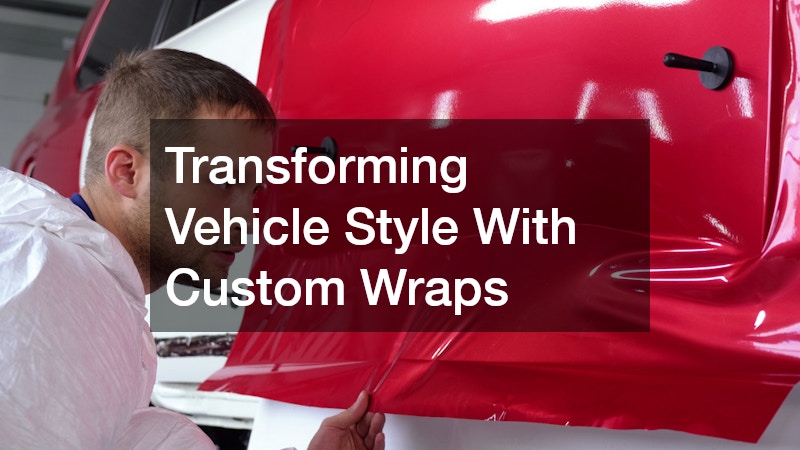
Vehicle wraps are one of the most versatile and impactful customization options available today. They allow owners to completely transform a vehicle’s appearance without permanently altering the original paint.
Vehicle wraps come in a wide variety of finishes, including matte, gloss, satin, metallic, and textured designs. They can be used for full-body transformations or partial accents depending on style preferences.
Key benefits include:
- Protection of original paint from UV rays and scratches
- Reversible customization option
- Wide range of color and texture choices
- Cost-effective alternative to repainting
Maintenance tips for wraps:
- Hand wash using gentle, non-abrasive products
- Avoid high-pressure washing near edges
- Park in shaded areas when possible
- Inspect edges regularly for lifting or wear
Proper installation and care significantly extend the lifespan of wraps and preserve their visual impact.
Improving Comfort and Protection Through Window Upgrades
Window enhancements are another essential part of modern vehicle customization. They improve comfort inside the cabin while also protecting interior materials from sun damage.
Window tinting reduces glare, blocks harmful UV rays, and helps regulate interior temperature. This makes driving more comfortable and protects upholstery, dashboards, and electronics from fading or cracking over time.
Important considerations:
- Legal tint limits vary by region and must be followed
- Different film types offer varying levels of heat and UV protection
- Professional installation reduces bubbling and peeling risks
Benefits of tinting include:
- Improved driving visibility in bright conditions
- Reduced interior heat buildup
- Increased privacy and security
- Protection from UV-related interior damage
When properly installed, tinting is both a functional and aesthetic upgrade that enhances the overall driving experience.
Repairing and Refinishing Exterior Damage Before Final Enhancements
Before applying final aesthetic upgrades, it is essential to ensure that all exterior damage has been properly addressed. Even small imperfections can become more noticeable once wraps, coatings, or tinting are applied.
A body shop provides specialized repair services that restore structural integrity and surface quality. These repairs are essential for ensuring that upgrades adhere correctly and look seamless.
Typical body shop services include:
- Collision repair and panel replacement
- Paint correction and blending
- Structural alignment adjustments
- Rust removal and prevention treatments
When paint damage is present, auto body paint repair becomes necessary to restore a consistent finish. This ensures that wraps or coatings adhere evenly and do not highlight underlying flaws.
Proper repair work ensures that customization enhances the vehicle rather than masking unresolved issues.
Protecting Your Vehicle With Advanced Surface Coatings
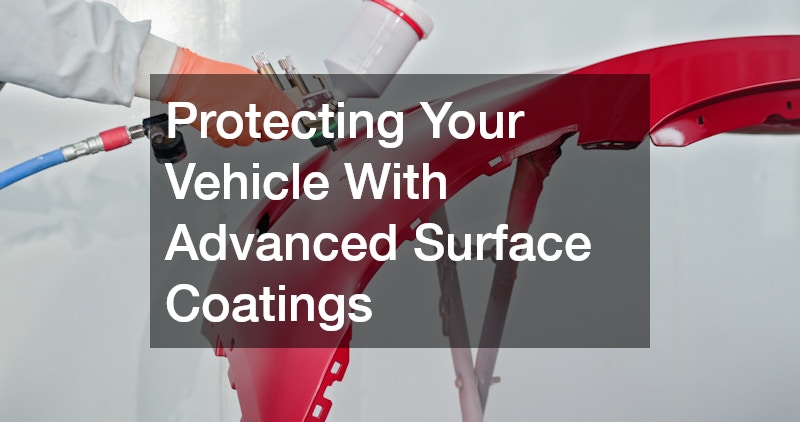
Protective coatings are becoming increasingly popular due to their ability to preserve exterior finishes for long periods. Among these, ceramic coating stands out for its durability and long-term protection.
Ceramic coating creates a protective layer that bonds with the vehicle’s surface, offering resistance against UV rays, dirt, water, and minor scratches. It also enhances gloss and makes cleaning significantly easier.
Advantages of ceramic coating include:
- Long-lasting protection compared to traditional wax
- Hydrophobic properties that repel water and dirt
- Enhanced gloss and depth of finish
- Reduced need for frequent maintenance
Ceramic coating installation requires precision, as improper application can result in uneven coverage or reduced effectiveness. Professional installation ensures proper bonding and long-term performance.
Professional Application Techniques for Long-Lasting Results
The quality of any vehicle upgrade depends heavily on installation technique because even premium materials are highly sensitive to surface conditions, environmental factors, and application precision. A small mistake during alignment, pressure application, or curing can compromise the entire result, leading to visible defects or premature failure. This is especially true for upgrades that rely on adhesion or chemical bonding, where consistency and timing are critical.
Professional installers follow strict processes to ensure accuracy and durability, often working in controlled environments designed specifically to minimize contamination and environmental interference. Temperature, humidity, and airflow are carefully managed because even slight variations can affect how materials settle or bond to the vehicle surface. Precision is also maintained through the use of specialized measuring tools, cutting equipment, and application systems that reduce human error and improve consistency across large surfaces.
Key elements of professional application:
- Clean, dust-free installation environment to prevent particles from becoming trapped under wraps, coatings, or films, which can create bumps or weak adhesion points
- Precise alignment and cutting techniques that ensure seams, edges, and panels match perfectly without stretching, wrinkling, or visible gaps
- Controlled curing times for coatings and adhesives so materials bond correctly and achieve full strength before the vehicle is exposed to movement or environmental stress
- Layered application methods for coatings and wraps that build uniform coverage gradually, reducing the risk of streaks, bubbles, or uneven thickness
Each of these elements contributes to a controlled installation process that prioritizes long-term durability over speed. When applied correctly, these techniques ensure that materials perform as intended under real-world driving conditions.
Why professional application matters:
- Prevents bubbling, peeling, or misalignment that can occur when air pockets are trapped or when surfaces are not properly prepped before installation
- Ensures even coverage and a smooth finish that enhances the vehicle’s appearance without visible seams or inconsistencies
- Maximizes product lifespan by ensuring proper adhesion, curing, and protection from environmental wear
- Reduces the need for early rework or correction, which can be costly and time-consuming if installation errors occur
Attention to detail during installation is what separates average results from high-quality, long-lasting finishes, as precision at every stage determines how well the upgrade performs over time and how well it withstands daily use, weather exposure, and regular cleaning.
Repairing Paint Issues Before High-End Customization
Paint condition plays a major role in how well upgrades perform and appear because every customization layer—whether it is a wrap, protective coating, or detailing enhancement—relies on the integrity of the surface beneath it. If the paint is uneven, contaminated, or structurally compromised, even high-quality materials may fail to adhere properly or may highlight imperfections instead of concealing them. In some cases, flaws that are barely noticeable on their own become significantly more visible once a glossy wrap or coating is applied.
Auto body paint repair addresses issues such as fading, oxidation, scratches, and chips before customization begins, ensuring the surface is restored to a stable and uniform condition. This process is not just cosmetic; it is foundational. By correcting damage at the paint level, technicians create a reliable base that allows wraps to bond evenly, coatings to cure properly, and detailing work to produce a consistent finish across the entire vehicle.
Common paint issues addressed:
- Sun fading and color inconsistency, which often occur from prolonged UV exposure, result in uneven panels or mismatched tones across the vehicle body
- Surface oxidation and dullness, where the clear coat breaks down over time and leaves a chalky or faded appearance that reduces gloss and clarity
- Scratches and minor abrasions, which may seem superficial but can interrupt the smooth application of films or protective layers
- Clear coat damage, including peeling or flaking, which compromises both the appearance and protection of the underlying paint layers
Each of these issues can affect not only aesthetics but also the durability of any applied upgrades. For example, wraps applied over oxidized paint may not adhere evenly, and coatings applied over scratched surfaces may cure unevenly or fail prematurely.
Steps involved in paint restoration:
- Surface sanding and smoothing to remove imperfections, level uneven areas, and create a uniform texture suitable for further treatment
- Color matching and blending to ensure that repaired sections align seamlessly with surrounding panels, maintaining visual consistency across the vehicle
- Clear coat reapplication to restore protective layers, enhance gloss, and provide a stable surface for additional upgrades
- Final polishing for a uniform finish that enhances depth, removes micro-imperfections, and prepares the surface for customization
Each step builds on the previous one, gradually transforming a damaged or inconsistent surface into a refined base suitable for high-end upgrades. Skipping or rushing any part of this process can lead to visible flaws once customization is applied, especially under direct sunlight or reflective lighting conditions.
Proper paint repair ensures that customization enhances the vehicle rather than highlighting imperfections underneath. When the surface is correctly restored, wraps appear smoother, coatings bond more effectively, and detailing results achieve a higher level of visual depth and durability.
Maintaining Your Upgraded Vehicle for Long-Term Value
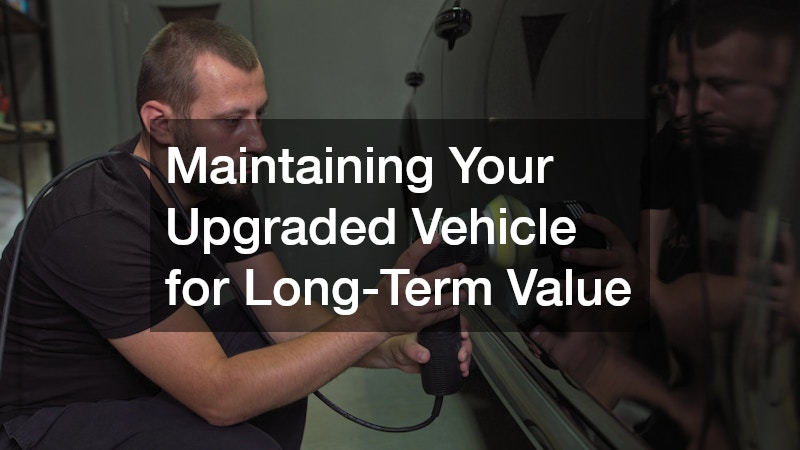
Once upgrades are complete, proper maintenance is essential to preserve both appearance and functionality. Without regular care, even high-quality enhancements can degrade prematurely.
Maintenance strategies include:
- Gentle washing using pH-neutral products
- Avoiding abrasive brushes or harsh chemicals
- Regular inspection of wraps, coatings, and tint edges
- Prompt cleaning of contaminants like bird droppings or sap
Seasonal care considerations:
- Protect from extreme heat and prolonged sun exposure
- Remove road salt and debris in the winter months
- Apply protective maintenance products when recommended
- Store in covered or shaded areas when possible
Long-term care benefits:
- Extended lifespan of wraps, tint, and coatings
- Maintained gloss and visual appeal
- Reduced need for repairs or reapplication
- Higher resale value over time
Consistent maintenance ensures that the investment in customization continues to deliver value long after installation.
Conclusion
Upgrading a vehicle with wraps, tinting, detailing, coatings, and refinishing is more than a cosmetic decision—it is a long-term investment in protection, performance, and style. When each step is done correctly, from preparation and repair to installation and maintenance, the results can dramatically enhance both appearance and durability.
Professional services ensure that every layer of customization works together seamlessly, creating a vehicle that not only looks better but also withstands daily wear and environmental exposure more effectively over time.